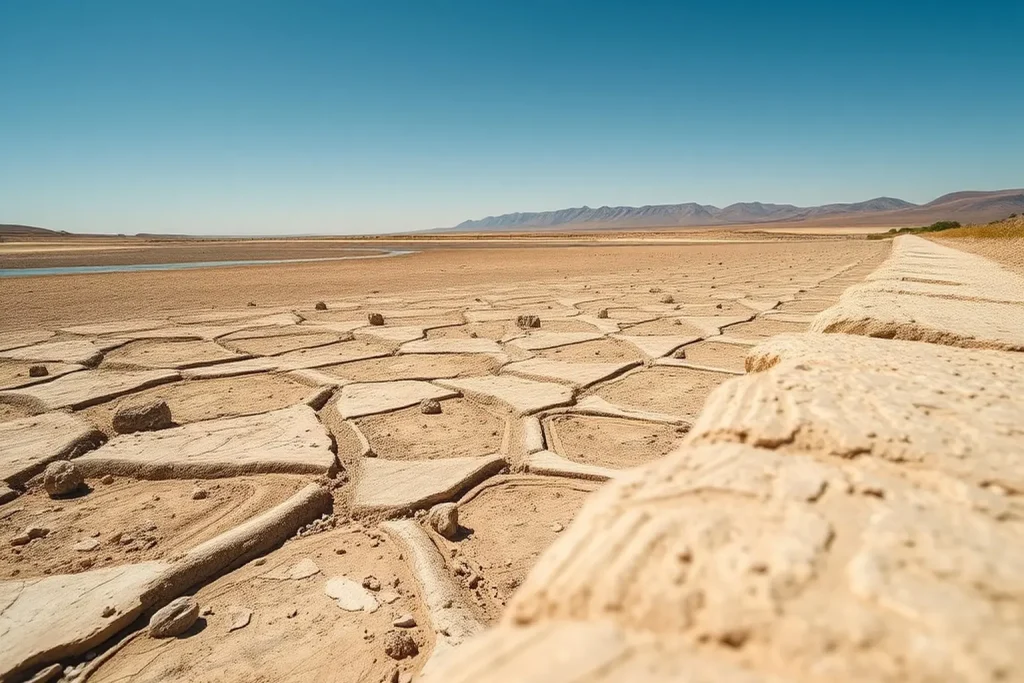
The province of Ourense is preparing for a future in which extreme heat will cease to be a sporadic occurrence to become a structural part of daily life. According to projections from the Heat Vulnerability Atlas, developed by the National Supercomputing Centre (Barcelona Supercomputing Centre), in 2050 the province will accumulate some 58 days a year under heatwave conditions. That’s almost two months of continuous extreme temperatures.
A foreseeable climatic U-turn
The Atlas’s work is based on climate models combined with urban and social variables. That is to say: it doesn’t just look at thermometers, but also at how cities are built and who lives in them. For Ourense, the result paints a concerning scenario when comparing the 2000 reference period with the 2050 horizon: a notable increase in the number of days with extreme temperatures.
To no one’s surprise, Ourense’s geography already does it few favours. The inland province of Galicia, marked by valleys like the one crossed by the Miño river, has historically recorded some of the highest temperatures in the Galician community each summer. What changes now is the scale: what used to be specific episodes will become a recurring and prolonged phenomenon.

Salado Golf & Beach Resort
Descubre la oportunidad de inversión más exclusiva del Caribe. Villas de lujo con retorno garantizado del 12% anual en Punta Cana.
Conoce más →Heat as a public health issue
The report’s warnings don’t stop at weather statistics. The consequences for the population, the document points out, will be one of the main focal points. And it is worth remembering that extreme heat is not just a matter of discomfort: it particularly affects elderly people, children, chronic patients and those who work outdoors.
Servidores VPS en España
VPS con NVMe, tráfico ilimitado y panel de control. Desde 9,95€/mes.
Ver servidores VPS →No one escapes it: a territory like Ourense, with an ageing population and dispersed settlements in many municipalities, faces a tough test in terms of health services, home care and social emergency plans. The heatwave concept, which has so far belonged to the news vocabulary of summer, will end up conditioning everything from leisure timetables to work organisation.
Cities and homes, before the mirror
Perhaps the most relevant aspect of the Atlas is that it links the climate with urban design. The text warns that the form of life of the province’s residents and the very physiognomy of its cities will be conditioned by this new thermal reality. Housing adaptation becomes a necessity.
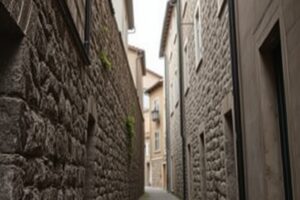
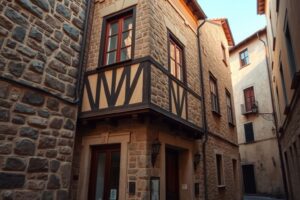
Streets with little shade, dark paved surfaces that accumulate heat during the day and release it at night, homes unprepared for sustained high temperatures: all of this is starting to be looked at with different eyes. The city of Ourense itself, with its historic centre of stone and narrow streets, and neighbourhoods that grow with little green space, will have to rethink its model. River areas, parks, tree-lined avenues and building renovation are now climate policy, not mere urban decoration.
Anticipating rather than suffering
The key point is that having a horizon like 2050 mapped out with concrete figures is also an opportunity. When a report of this nature quantifies the problem — almost 60 days a year of extreme heat — the excuse of unpredictability disappears. Municipalities, the provincial institution and Galicia’s regional administration have on the table a tool to plan adaptation measures with a lead time of decades, not weeks.
Will we know how to use that time? That is the real question. Because climate projections don’t ask for blind trust, they ask for preparation. And in a province like Ourense, where summer heat has always been part of its character, distinguishing between what is customary and what is dangerous will mark the difference between adapting and suffering. The countdown to 2050 has already begun, and every urban planning and health planning decision made between now and then will count.
Con información de La Región
Te puede interesar:
Turismo de Galicia — Rutas, playas y gastronomía
Turismo en Galicia — 6.500+ establecimientos y planes
Albergue en Sarria — Camino de Santiago desde Sarria
¿Planeas visitar Galicia?
Encuentra hoteles, apartamentos y casas con las mejores ofertas
Buscar alojamiento en Hotels.comAcumula sellos · Consigue noches gratis
Publicidad